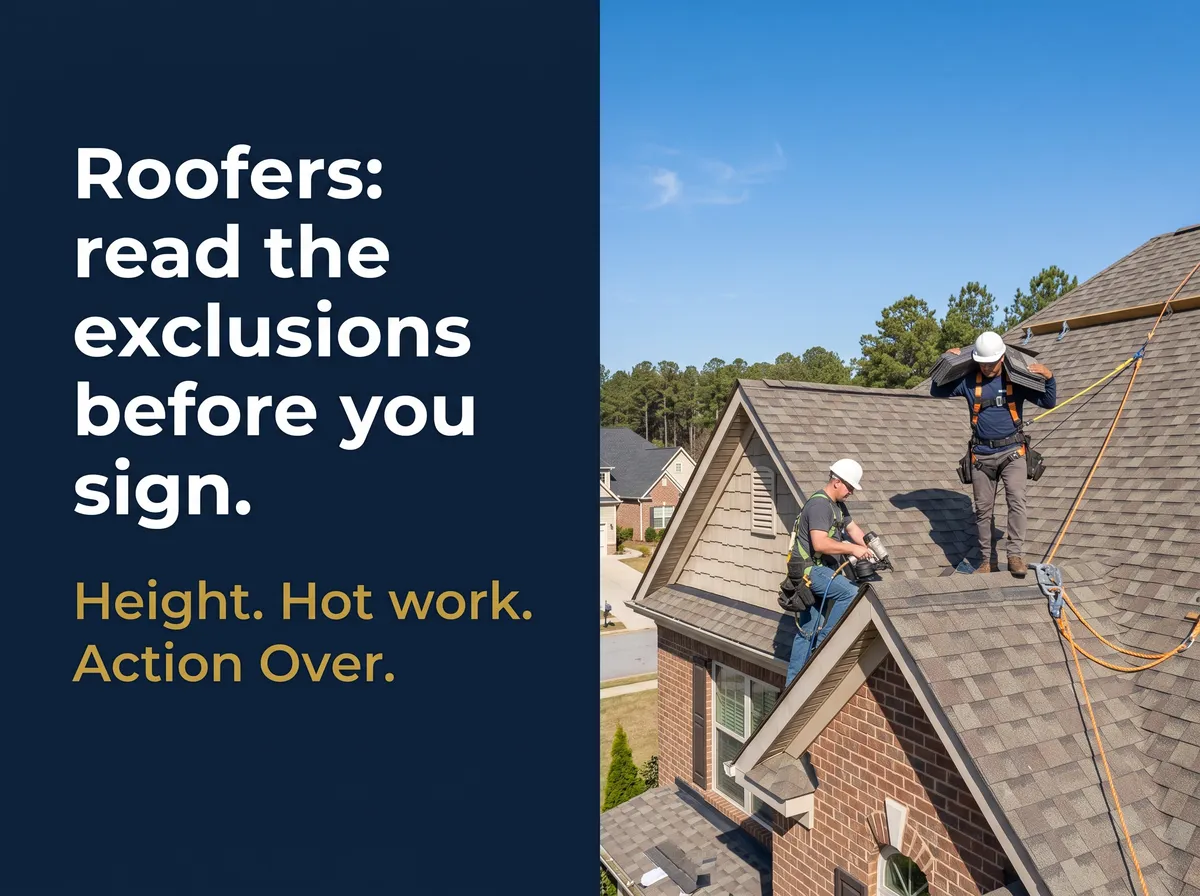
What Insurance and Licensing Does a Georgia Roofing Contractor Need Before Starting Jobs?
Short answer: Before a Georgia roofing company takes its first job, it usually needs three things: the right license for its scope of work, general liability (GL) insurance, and either workers' comp or a plan for it. Most general contractors and property managers will ask for a certificate of insurance (COI) before you set foot on the roof. Quinn Alliance, a Georgia-licensed independent agency (License #244699), quotes roofing GL and workers' comp with multiple carriers and specialty roofing markets.
Licensing: check your scope before you bid
Georgia's contractor licensing law, O.C.G.A. Title 43, Chapter 41, covers residential and general contractors. Under that law, residential contractor work is defined to include jobs where the total value of the work exceeds $2,500.
Roofing is treated differently. The Georgia State Licensing Board for Residential and General Contractors publishes a Traditional Specialty Contractors policy statement (revised March 2020) that lists flat roofing, sheet metal roofing, and shingles and shakes among the specialty trades that do not need a residential or general contractor license, as long as the work complies with national, state and local codes. The Board notes the list is under development and subject to change, and roofing bundled with framing, siding or other construction can change the answer.
Before you bid, confirm your situation with the Board and with the building department where the job is. Many cities and counties also require a local business license and a permit for re-roofs.
What GCs and property managers ask to see
- A certificate of insurance showing general liability, with the limits their contract requires (often $1 million per occurrence).
- Additional insured status for the GC or owner, if the contract requires it. That is an endorsement on your policy, not just a line on the certificate.
- Workers' comp proof, or a certificate showing a policy is in force. Under O.C.G.A. 34-9-8, a contractor can be liable for compensation to a subcontractor's injured employees, which is why GCs ask.
Workers' comp for a small roofing company
Georgia law exempts employers that regularly have fewer than three employees in the same business (O.C.G.A. 34-9-2). That does not mean a one-person roofer will be allowed on a job without a comp certificate: many GCs require one anyway. Some owners use an owner-excluded "ghost" policy to produce that certificate. A ghost policy usually excludes the owner from coverage, and a premium audit can charge you for any uninsured subcontractors you paid. We review your setup before recommending one.
How roofing insurance is priced
- General liability: your gross sales / 1,000 x the carrier's rate for your roofing class, subject to a minimum premium.
- Workers' comp: payroll / 100 x the class rate x your experience modifier, subject to a minimum premium.
The details that move a roofing quote most: residential or commercial work, steep or low slope, the height you work at, whether you use subcontractors, and your claims history.
What to have ready for a quote
- Entity type and years in business
- Estimated gross sales for the next 12 months
- Payroll by job type, and what you pay subcontractors
- Residential vs commercial split, steep vs low slope
- Current or prior carrier and 3 to 5 years of claims history
Common questions
Do I need a state license to roof in Georgia?
For roofing-only work, the Board's specialty contractor policy says flat roofing, sheet metal roofing, and shingles and shakes do not require a residential or general contractor license, if you follow applicable codes. Local business licenses and permits still apply. Confirm with the Board and your local building department.
Do I need workers' comp if I roof alone?
Georgia's statute may not require it for a business with fewer than three employees, but the job often does. Ask the GC what they require before you bid, and call us to review the options for your setup.
Does a ghost policy cover me as the owner?
Usually not. Most owner-excluded policies exclude the owner. They exist to show a policy is in force. Read your policy, and ask us how it treats you and any subs.
How fast can I get a certificate?
Once a policy is bound, certificates can usually be issued quickly. The quote and underwriting step is what takes time, so start before the job is scheduled.
Ready to compare? Start a roofing quote or call (470) 648-6767. Related: Georgia roofing contractor insurance.
Sources: Georgia Secretary of State, Traditional Specialty Contractors policy statement; O.C.G.A. 43-41-2, 34-9-2 and 34-9-8 (reviewed November 2026).
Quinn Alliance LLC, GA License #244699. For Georgia businesses only. Educational only, not legal advice. Coverage is subject to underwriting and to policy terms, conditions and exclusions.