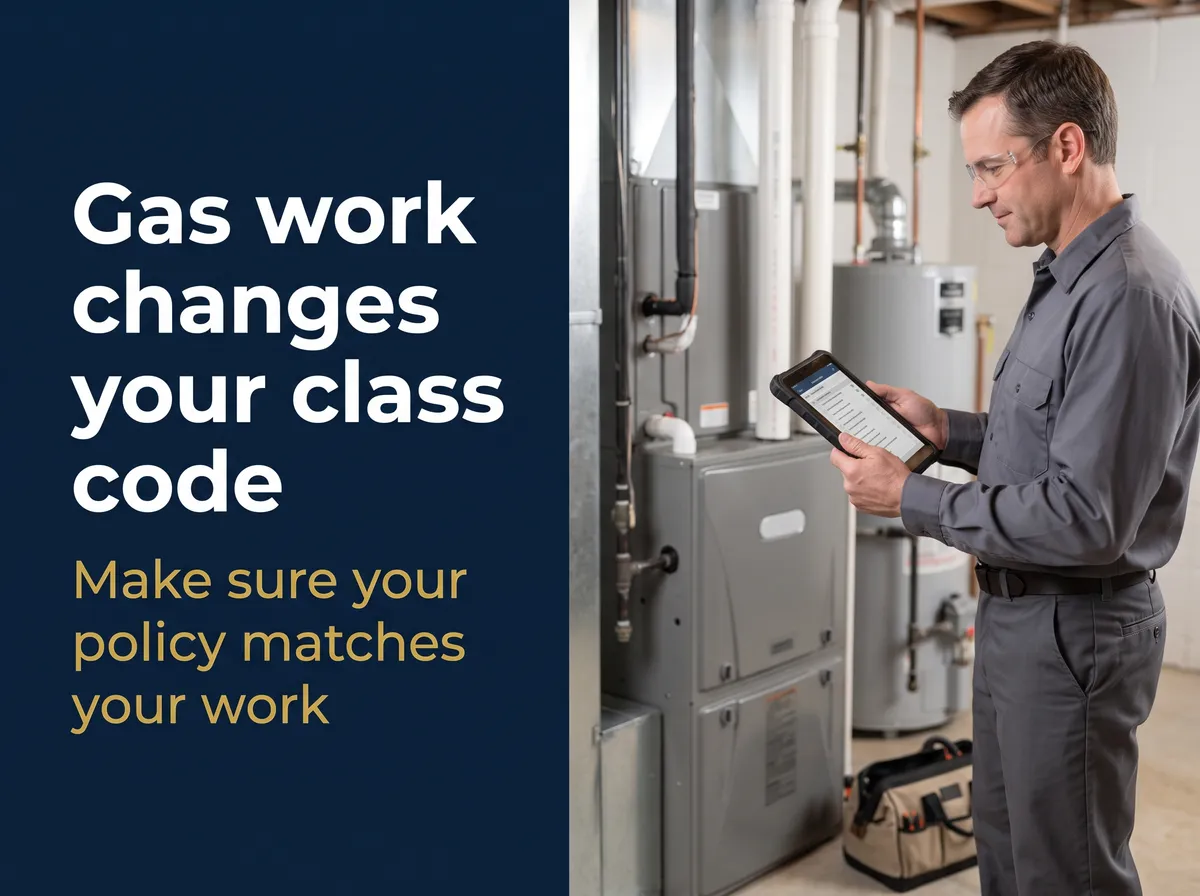
HVAC Contractor Insurance in Georgia for Heating Season: Gas Work, Carbon Monoxide and Callbacks
Short answer: Before heating season peaks, Georgia HVAC contractors should check four things in their insurance: that the classification includes any gas or propane work, how the policy treats carbon monoxide claims (some pollution exclusions can reach them), that completed operations coverage is in place for work you finished months ago, and that new techs and vans are reported. Those are where heating-season claims tend to fall through.
Why heating season is different
Cooling season is about volume. Heating season adds combustion: gas furnaces, gas lines, propane, heat exchangers and venting. A mistake there can hurt people, not just property, and the claim can show up long after the service call.
The heating-season insurance checklist
1. Gas and propane work matches your classification
General liability is rated by class, and HVAC work that includes gas or LPG is often classed differently from work that doesn't. If your policy was written for cooling-only work and you now run gas lines or service propane units, tell your agent. A mismatched class can mean a questioned claim.
2. Carbon monoxide and the pollution exclusion
Most general liability policies carry a pollution exclusion. Depending on the wording, some carriers have argued it applies to carbon monoxide claims. Ask how your policy handles a CO claim, and whether contractors pollution liability makes sense for your work.
3. Completed operations
A furnace you installed in October can lead to a claim in February. That's completed operations coverage. Check that your policy includes it and that the limit fits your contracts.
4. New techs and workers' comp
Georgia requires workers' comp for most businesses with three or more employees, including part-time. If you add techs for the season, your payroll goes up, and your audit will catch it. Report new hires so the audit doesn't surprise you. HVAC installation and service is commonly classed under NCCI code 5537.
5. Vans and tools
More calls mean more miles. Make sure every work vehicle is on your commercial auto policy, and that tools and equipment coverage fits what rides in the van.
6. Subs
If you sub out duct work or installs, collect current certificates before they start. Why workers' comp audits charge you for uninsured subs.
Licensing in Georgia
Georgia licenses conditioned air contractors through the State Construction Industry Licensing Board, with Class I (restricted) and Class II (unrestricted) licenses. The license itself doesn't set a general liability minimum, but most GCs, builders and commercial clients require it, often $1 million per occurrence with additional insured status.
How we help
When you quote with us, tell us whether you do gas or propane work, residential or commercial, rooftop units, and whether you sub out. We shop multiple carriers and specialty markets and match the classification to your work and your GC's requirements. HVAC contractor insurance in Georgia.
Georgia HVAC contractor?
Check your coverage before the no-heat calls start.
Start your HVAC quote or call (470) 648-6767.
FAQ
Does general liability cover carbon monoxide claims for HVAC contractors?
It depends on the policy wording. Many GL policies carry a pollution exclusion, and some carriers have argued it applies to carbon monoxide. Ask your agent how your policy treats CO claims and whether contractors pollution liability fits your work.
Do I need a different policy if I do gas or propane work?
Not always a different policy, but often a different classification. Tell your agent about any gas or LPG work so the policy is written for it.
Do Georgia HVAC contractors need workers' comp?
Georgia requires workers' comp for most businesses with three or more employees, including part-time. Many GCs require it from every sub by contract.
What is completed operations coverage?
It covers claims from work you've already finished, like a furnace installed months before the incident. Most HVAC claims involving injury or damage fall here.
By Frank Quinn, Principal Agent, Quinn Alliance LLC, specializing in construction trades and businesses in Georgia. GA License #244699. Georgia businesses only. Educational only. Coverage depends on your policy terms.