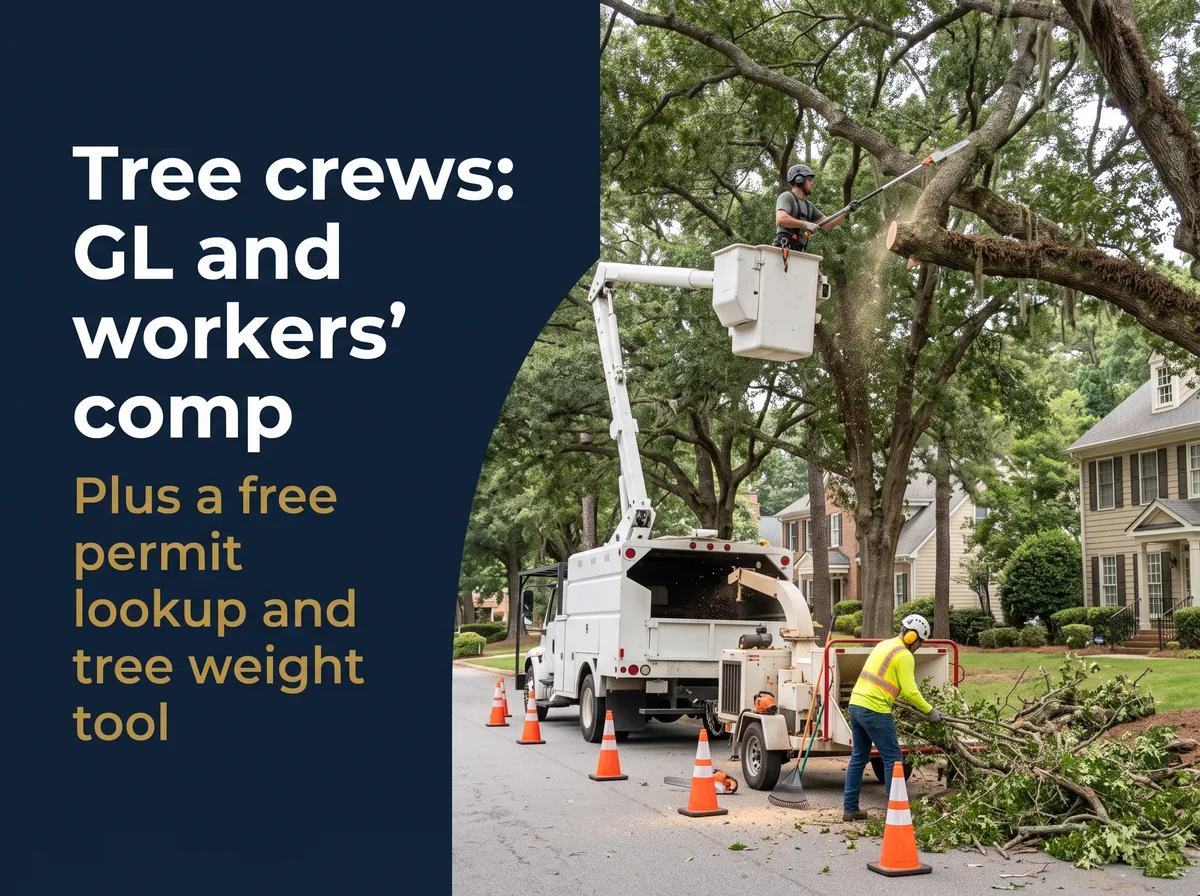
Storm Cleanup Season: A Tree Service Insurance Checklist for Georgia Crews
Short answer: Storm cleanup is the busiest and riskiest time of year for a Georgia tree service. Before you take storm jobs, check that your general liability covers the equipment you'll use (cranes, bucket trucks, stump grinders), how your policy treats work near power lines, that every helper is covered by workers' comp, and that your equipment and vehicles are listed. A storm season of unreported helpers can turn into a large audit bill.
Why storm season changes the risk
After a storm like Hurricane Helene in 2024, which left damaged trees across much of Georgia, tree services face more calls, more hazardous removals, trees on roofs and power lines, extra helpers and long days. Most of the costly tree claims and audit surprises come out of that rush.
The storm-season tree service checklist
1. Equipment you'll actually use
Some tree service policies limit crane work, or exclude it unless it's listed. If you'll rent a crane or run a bucket truck for storm jobs, tell your agent before the job, not after.
2. Power lines
Only qualified line-clearance workers should work near energized lines, and many tree service policies exclude utility line clearance work. Know where your policy draws that line before a job puts you there.
3. Helpers and workers' comp
Georgia requires workers' comp for most businesses with three or more employees, including part-time. Storm helpers usually count, even if you pay them cash or on a 1099. Tree trimming is commonly classed under NCCI code 0106, one of the higher workers' comp rates, so unreported helpers found at audit can cost a lot. Report them as you add them.
4. Subs and other crews
If you team up with another crew, get their certificate before they start. Uninsured subs can be charged to you at your workers' comp audit. How that works in Georgia.
5. Property damage
Dropping a limb on a house, fence or car is the claim tree services see most. Check your per-occurrence limit and any exclusions for damage to the property you're working on.
6. Equipment and vehicles
Chippers, stump grinders, trailers and bucket trucks need to be scheduled on the right policy: commercial auto for vehicles, inland marine or equipment coverage for the rest.
7. Permits
Many Georgia cities and counties require a permit to remove certain trees, even after a storm. Our tree clients get a permit lookup tool that shows whether the city or county requires a permit before you cut, plus a tree weight estimator for rigging and hauling.
How we help
We shop specialty markets that write tree services, including climbing, bucket truck and crane work, and we check the fine print before you bind so the policy fits the work you actually do. Tree service insurance in Georgia.
Georgia tree service?
Get your coverage right before the next storm.
FAQ
Does tree service insurance cover crane work?
Not always. Some policies limit or exclude crane work unless it's listed. Tell your agent about any crane or bucket truck work before the job.
Do storm helpers need workers' comp in Georgia?
Usually, yes. Georgia requires workers' comp for most businesses with three or more employees, including part-time, and helpers paid in cash or on a 1099 can still count as employees at audit.
Does my policy cover work near power lines?
Many tree service policies exclude utility line clearance work, and only qualified line-clearance workers should work near energized lines. Check your policy wording.
Do I need a permit to remove a storm-damaged tree in Georgia?
It depends on the city or county. Many local governments require permits for certain trees, even after a storm. Check before you cut.
By Frank Quinn, Principal Agent, Quinn Alliance LLC, specializing in construction trades and businesses in Georgia. GA License #244699. Georgia businesses only. Educational only. Coverage depends on your policy terms.